
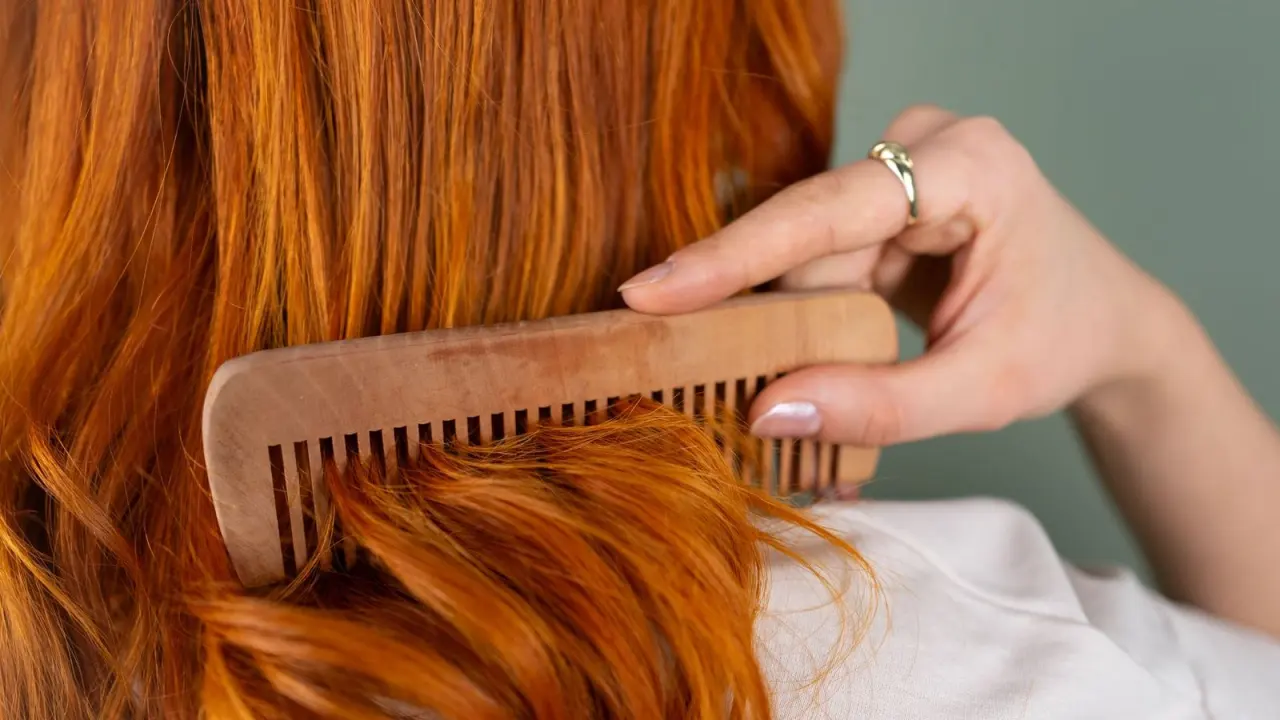
Knots in your extensions are stressful, and yanking only makes them worse. Here is how to detangle hair extensions: hold the roots steady, add slip with a spray, and work from the ends up with a wide-tooth comb.
For the wider routine, start with the hair extension care guide.
| Detangling basics | Value |
|---|---|
| Where to start brushing | From the ends up |
| Sections for a thorough detangle | Four sections |
| Brushing bonded extensions | 2-3 times daily |
| Washing your hairbrush | Once a week |
These figures come from Stylist magazine’s brushing guide and Babe Hair Extensions’ brushing tips. Advice like this can change, so check the sources before you rely on the numbers.
Why extensions tangle in the first place
Extensions don’t get the help your own hair gets. When bonds hold whole sections of strands together, it is hard for scalp oils to travel down the hair, and dry hair tangles more easily, according to Ugeat’s brushing guide.
Friction does the rest. Overnight movement, scarves, backpacks and rough drying all rub the lengths together until a small snarl becomes a knot.
The good news is that early detangling is quick. A knot caught while it is still loose takes seconds, while a mat that has been left for weeks can take an hour and may not come out at all.
Tools to have within reach
The right tools matter more than strength. Set these out before you begin, so you never reach for a fine-tooth comb in a hurry:
- Wide-tooth comb: the starting point for most detangling, used from the ends upward.
- Extension brush: soft, rounded bristles that glide over wefts and bonds without snagging.
- Detangling spray or leave-in conditioner: slip that lets knots loosen instead of tearing.
- Non-slip clips: to hold sections out of the way so they don’t pull on the extensions.
- Rat-tail comb: for picking apart one stubborn knot at a time.
Salon guidance from Kosa Salon SF describes the same kit: a wide-tooth comb, an extension-specific brush, a leave-in conditioner and clips. It also warns that a regular brush can catch on the weft.
How to detangle hair extensions step by step
Work slowly and in small sections. Rushing is what pulls out bonds and natural hair.
- Remove clips or ties gently so you don’t tug on the roots of the extensions.
- Section the hair. Pin the top layers out of the way and work on a small piece at a time.
- Support the roots. Hold the hair just above the bond or clip with your free hand so the brush never pulls on the attachment point.
- Spray for slip. Mist a detangler onto each section as you go.
- Start at the ends. Smooth the last few inches first, then move up the hair a few inches at a time.
- Finish near the roots only once the lengths below are smooth, still holding the hair above the bond.
Stylists quoted by Stylist magazine give the reason for starting low: brushing from the top pushes every knot into one ball. They suggest splitting the hair into four sections and brushing gently from the ends, and say it is quicker than it sounds, as detailed in their brushing rules.
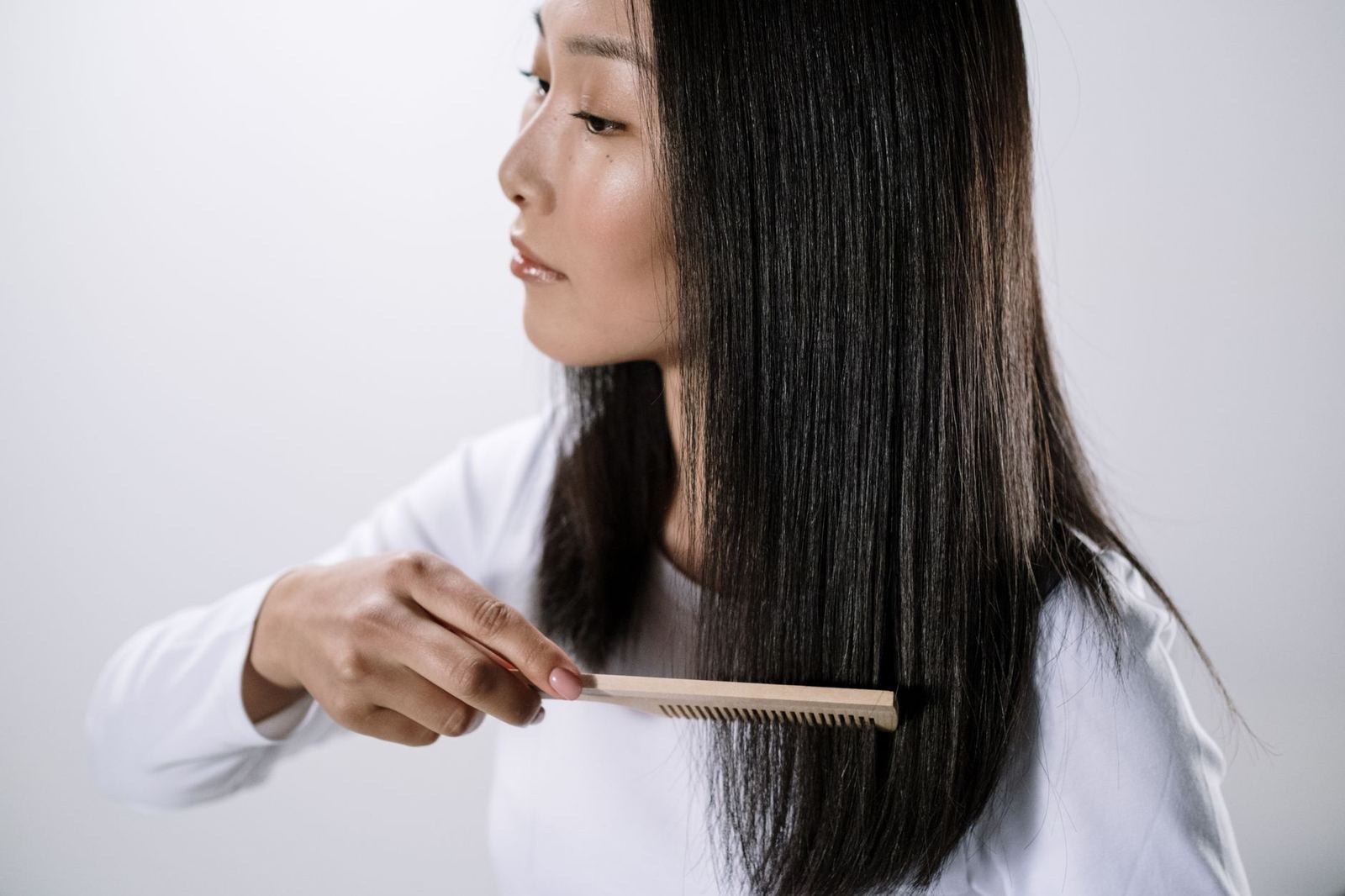
Clip-ins and bonded extensions need different handling
The method is the same, but the weak points are not. With clip-ins the risk is the clips and the weft. With tape-ins or micro links it is the bond.
Clip-in extensions
- Brush your natural hair first, clip the extensions in, then blend and brush from the ends up.
- Take extra care around the clips, and keep direct heat off them.
- Brush before storing: lay the extensions flat, hold the weft, and brush from the mid-lengths down.
- Store them rolled up or flat in a silk or satin pouch to reduce friction.
Tape-in and micro link extensions
Brushing straight down from the roots loosens bonds and pulls out your natural hair. Section the hair, hold it just above each bond, and brush from the mid-lengths to the ends first, as Ugeat’s guide explains.
Before bed, give your hair a gentle brush, then loosely braid it or wear a silk or satin bonnet. Our notes on how to sleep with hair extensions cover the night routine in more detail.
What if a knot won’t budge?
Don’t yank. Saturate the knot with a detangling spray or conditioner, then use your fingers or the tip of a rat-tail comb to pick it apart, starting from the very bottom, as Ugeat advises.
Babe’s tips agree that knots should be pulled apart with your fingers rather than dragged out with a brush, and that aggressive pulling causes breakage. Their full guidance is on the Babe Hair Extensions blog.
If a mat sits tight against the bonds, stop. Forcing it is how bonds slip and natural hair gets pulled out, so it is better to pause and let the person who fitted your extensions look at it.
Mistakes that cause pulling and shedding
Most shedding after brushing traces back to a short list of habits. Ugeat’s guide names three:
- Brushing dry knots: tugging aggressively at dry tangles causes heavy breakage and shedding.
- Ignoring root support: brushing straight down from the roots loosens bonds.
- Using the wrong tool on wet hair: a fine-tooth comb on sopping wet, fragile extensions causes severe damage.
Brushing more is not better either. A stylist quoted in Stylist magazine calls the “100 strokes a night” rule a myth and advises brushing natural hair only twice a day. Babe Hair Extensions advises brushing extensions 2-3 times daily, so keep each session gentle and focus on quality rather than stroke count.
How to stop tangles coming back
Prevention is mostly routine. Brush your extensions lightly before every wash so tangles don’t set while they are wet, as Kosa Salon SF recommends. Our guide on how to wash hair extensions covers the washing itself.
After washing, Ugeat suggests patting dry with a towel, applying a leave-in conditioner, and using a wide-tooth comb from the ends up before blow-drying. Wet extensions are fragile, so skip the rough towel rub.
Two small habits help too. Wash your hairbrush once a week, since stylists in Stylist magazine say clogged bristles spread old product and oil. For your own natural hair at the roots, Garnier’s detangling tips recommend regular trims every 4-6 weeks to limit split ends and tangles.
Frequently asked questions
Should I detangle extensions wet or dry?
Show answer
Sources differ, so go gentle either way. Kosa Salon SF advises against brushing extensions when wet and says to use a wide-tooth comb if you must. Ugeat suggests detangling with conditioner in during a wash, then using a wide-tooth comb after patting dry.
Why do my extensions shed when I brush them?
Show answer
Pulling is the usual cause. Brushing dry knots aggressively and brushing straight down from the roots both stress the bonds and your natural hair, so support the roots and start from the ends.
Can I use my regular hairbrush on extensions?
Show answer
An extension brush with soft, rounded bristles is the safer choice because regular brushes can snag on wefts and bonds. A wide-tooth comb is a good option for the first pass.
What do I do about a knot I can’t loosen?
Show answer
Saturate it with detangling spray or conditioner, then pick it apart with your fingers or a rat-tail comb from the bottom of the knot. If it sits against a bond, stop and ask the stylist who fitted your extensions.